Building a Stronger Core: 5 Essential Exercises for Everyday Athletes
A strong core is about far more than visible abs. It’s the foundation for almost every movement you make—walking, lifting groceries, running, playing sports, even sitting at your desk. For everyday athletes, a well‑developed core means better balance, more power, fewer injuries, and greater efficiency in any activity.
Below are five essential exercises that build real-world core strength. They target not just the “six-pack” muscles, but also the deep stabilizers that protect your spine and connect your upper and lower body.
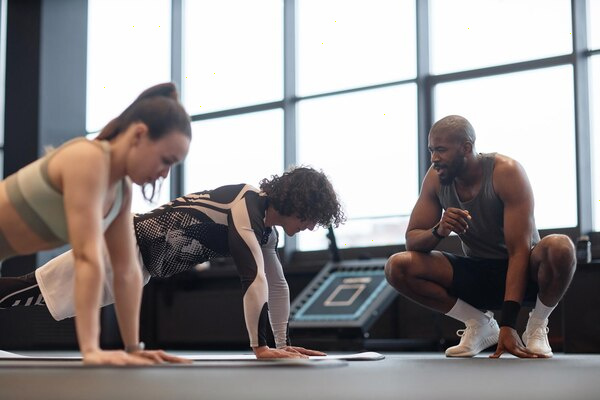
1. Plank (and Plank Variations)
Why it matters:
The plank trains your entire midsection—rectus abdominis, obliques, transverse abdominis, and lower back—while also challenging shoulders and glutes. It builds endurance and teaches you how to brace your core, a skill you use in every sport and daily task.
How to do it:
- Start face down on the floor.
- Place your elbows under your shoulders, forearms on the ground, palms flat or hands clasped.
- Extend your legs straight back, feet hip-width apart.
- Squeeze your glutes, brace your abs as if preparing for a punch, and keep your body in a straight line from head to heels.
- Keep your neck neutral; eyes on the floor slightly ahead of your hands.
- Hold without letting your hips sag or pike.
Beginner: 3 × 15–20 seconds, resting 20–30 seconds.
Intermediate: 3–4 × 30–45 seconds.
Advanced variations:
- Plank with shoulder tap: From a high plank (on hands), lift one hand to tap the opposite shoulder while resisting hip rotation.
- Plank with leg lift: Hold a forearm plank and slowly lift one leg at a time, keeping hips stable.
2. Dead Bug
Why it matters:
The dead bug teaches core stability while your limbs move—exactly what you need for running, throwing, and lifting. It targets the deep stabilizers of your spine and helps correct the common habit of arching the lower back.
How to do it:
- Lie on your back, arms reaching straight up toward the ceiling.
- Lift your legs so your hips and knees are at 90 degrees (knees over hips, shins parallel to the floor).
- Gently flatten your lower back into the floor by engaging your abs.
- Slowly extend your right arm overhead and your left leg straight out until they hover just above the floor.
- Keep your lower back pressed down the whole time—if it arches, reduce your range of motion.
- Return to the starting position and repeat on the other side.
Volume: 2–3 sets of 6–10 controlled reps per side.
Coaching tip: Move slowly. The benefit comes from maintaining tension and control, not from speed.
3. Glute Bridge (and Hip Thrust Variations)
Why it matters:
A strong core depends on strong glutes and a stable pelvis. The glute bridge targets your glutes and hamstrings while reinforcing proper hip alignment and preventing excessive stress on your lower back.
How to do it:
- Lie on your back with knees bent and feet flat on the floor, hip-width apart, heels close to your glutes.
- Brace your core and squeeze your glutes.
- Press through your heels to lift your hips until your body forms a straight line from shoulders to knees.
- Avoid arching your lower back—drive the movement from your glutes.
- Pause at the top for 1–2 seconds, then lower with control.
Beginner: 2–3 sets of 10–12 reps.
Progressions:
- Single-leg glute bridge: Lift one foot off the floor and bridge using just the other leg, keeping hips level.
- Elevated glute bridge / hip thrust: Place your upper back on a bench or platform and perform the bridge with a larger range of motion. Add weight (barbell or dumbbell) when ready.
Coaching tip: Think about “tucking your tailbone” slightly as you lift to avoid over-arching your lower back.
4. Pallof Press
Why it matters:
The Pallof press is an anti-rotation exercise, meaning your core works to prevent movement rather than create it. This is highly functional: in sports and daily life, you often resist forces (like carrying an uneven load or bracing as you change direction).
How to do it:
You’ll need a resistance band or a cable machine.
- Anchor the band or set the cable at chest height.
- Stand sideways to the anchor point, feet shoulder-width apart, knees slightly bent.
- Hold the handle/band with both hands at your chest.
- Step out to create tension in the band.
- Brace your core and slowly press your hands straight out in front of your chest.
- Hold for 1–2 seconds, resisting any pull or rotation.
- Bring your hands back to your chest with control.
Volume: 2–3 sets of 8–12 reps per side.
Coaching tip: Your hips and shoulders should stay square, facing forward. If you’re twisting or leaning, step closer or use a lighter band.
5. Farmer’s Carry
Why it matters:
The farmer’s carry is a simple but powerful way to build functional core strength. By walking with weights in your hands, your core works to stabilize your spine, your shoulders stay strong, and your grip improves—all critical for everyday activities like carrying bags, lifting kids, or moving furniture.
How to do it:
- Stand tall holding a dumbbell, kettlebell, or similar weight in each hand (or one side only for more core demand).
- Engage your core, pull your shoulder blades gently back and down, and keep your chest open.
- Walk slowly and deliberately, maintaining an upright posture.
- Avoid leaning to one side or letting the weight pull you off balance.
Beginner: 2–3 rounds of 20–30 seconds with moderate weights.
Intermediate/Advanced:
- Increase distance or time (40–60 seconds).
- Use heavier weights.
- Try a suitcase carry (weight only on one side) for greater anti-lean, lateral core challenge.
Coaching tip: Think “tall and tight”: tall through the crown of your head, tight through your midsection.
Putting It All Together: A Simple Core Routine
You can combine these exercises into a short, effective core session two to three times per week, either on their own or at the end of your workouts:
- Plank: 3 × 30 seconds
- Dead Bug: 3 × 8 reps per side
- Glute Bridge: 3 × 12 reps (or 3 × 8 single-leg each side)
- Pallof Press: 2–3 × 10 reps per side
- Farmer’s Carry: 2–3 rounds of 30–40 seconds
Rest 30–60 seconds between sets, depending on your fitness level. Focus on quality over quantity: proper form and strong, consistent bracing matter more than longer holds or heavier weights.
Final Thoughts
Core training for everyday athletes should go beyond crunches and sit-ups. By emphasizing stability, anti-rotation, and hip strength, these five exercises build a resilient core that supports everything you do—on the playing field, in the gym, and in day-to-day life.
Start with the versions that feel challenging but controlled, and progress gradually. With consistent practice, you’ll feel stronger, move better, and be far more prepared for whatever your sport—and your everyday life—demands.